

January 2026:
India’s rapidly expanding digital infrastructure is emerging as a decisive force in reshaping the country’s small and medium business (SMB) landscape, creating new opportunities for growth, formalization, and global integration. Once constrained by limited access to credit, markets, and technology, SMBs are now leveraging digital public platforms to compete on a more level playing field.
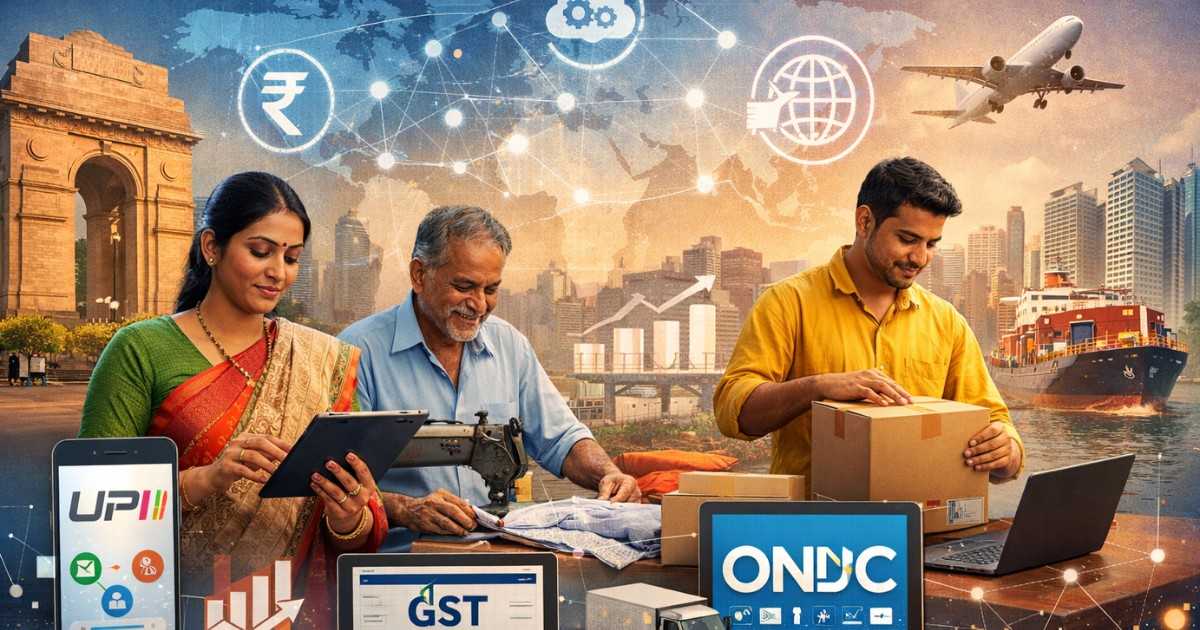
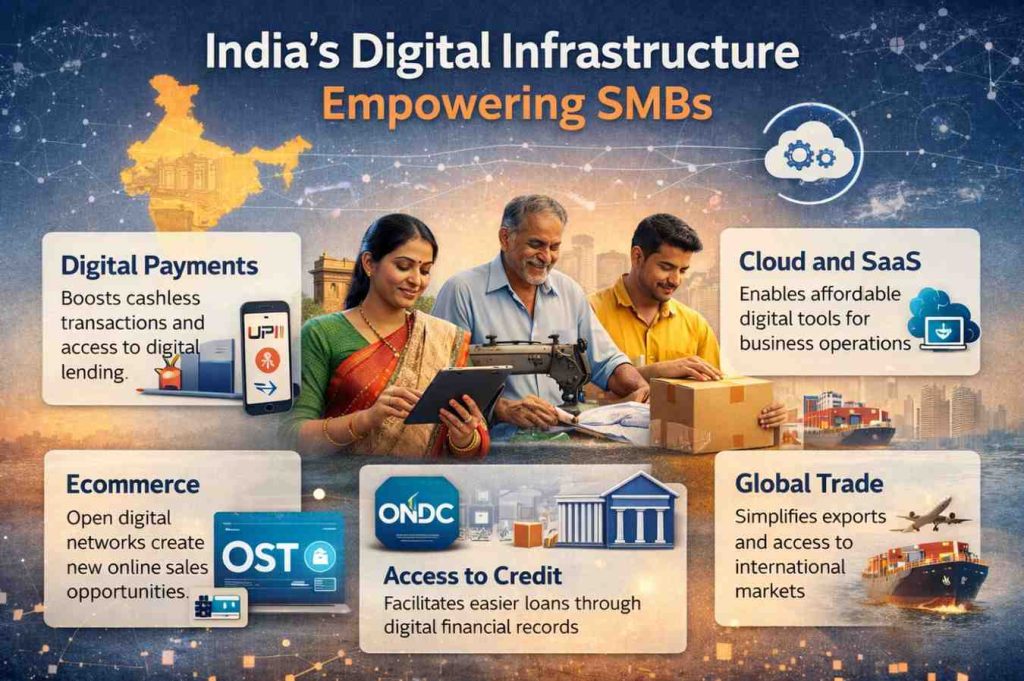
Over the past decade, the government-led push to build large-scale digital systems—ranging from Aadhaar and the Unified Payments Interface (UPI) to the Goods and Services Tax Network (GSTN) and the Open Network for Digital Commerce (ONDC)—has fundamentally altered how businesses operate. These platforms are reducing transaction costs, improving transparency, and expanding access to finance and customers for millions of enterprises across urban and rural India.
Formalization Gains Momentum
A key impact of India’s digital infrastructure has been the gradual shift of small businesses from the informal to the formal economy. Aadhaar-based digital identity and online business registration processes have simplified compliance and reduced bureaucratic hurdles. GST digitization, while initially challenging for smaller firms, has created a unified national market and improved supply-chain integration.
Industry experts note that digital records generated through tax filings and online transactions are enhancing the credibility of small businesses. This digital footprint is increasingly being used by banks and financial institutions to assess eligibility for loans and government support schemes.
UPI Transforms Everyday Commerce
The widespread adoption of UPI has been a major catalyst for change. With instant, low-cost digital payments now common even among street vendors and micro-enterprises, cash dependency is steadily declining. According to industry data, UPI transactions have become a critical source of financial data, enabling lenders to evaluate business performance in real time.
For small businesses, digital payments have also improved cash-flow management and reduced the risks associated with handling physical cash. Analysts say this shift is strengthening financial discipline while bringing more businesses into the formal banking system.
ONDC Levels the E-Commerce Playing Field
The launch of the Open Network for Digital Commerce marks a significant step toward democratizing online trade. Unlike traditional e-commerce platforms that rely on centralized control, ONDC enables interoperability between buyers and sellers across multiple applications.
This open framework allows small retailers, manufacturers, and service providers to reach customers nationwide without high commission costs or exclusive platform dependence. Policymakers believe ONDC could significantly expand digital commerce participation among small businesses, particularly in tier-II and tier-III cities.
Digital Tools Boost Productivity
Affordable cloud services and software-as-a-service (SaaS) solutions are further accelerating SMB digitization. Businesses are increasingly adopting digital accounting, inventory management, and customer engagement tools, many of which are tailored for Indian operating conditions and local languages.
Technology analysts say this shift is improving operational efficiency and enabling data-driven decision-making among small firms. The growing availability of AI-enabled tools is also helping SMBs optimize pricing, demand forecasting, and supply-chain planning.
Improved Access to Credit
Access to finance—long a structural challenge for small businesses—is improving through digitally enabled lending models. Platforms such as the Account Aggregator framework allow businesses to securely share financial data with lenders, reducing information gaps and approval timelines.
Fintech companies and public sector banks are using transaction data from GST, UPI, and e-invoicing systems to design customized credit products. As a result, working capital loans, invoice financing, and supply-chain credit are becoming more accessible to smaller enterprises.
Gateway to Global Markets
India’s digital infrastructure is also supporting the international ambitions of small businesses. Digital export platforms, online compliance systems, and global payment gateways are enabling SMBs to participate in cross-border trade with fewer intermediaries.
Service-based businesses, including IT services, design, and consulting firms, are benefiting from remote work platforms and digital contracts, allowing them to serve global clients directly from India.
Challenges Persist
Despite these gains, challenges remain. Digital literacy gaps, cybersecurity risks, and uneven internet connectivity continue to affect adoption, particularly in rural areas. Experts emphasize the need for ongoing training, stronger data protection frameworks, and improved interoperability across platforms.
Economists view India’s digital infrastructure expansion as a structural transformation rather than a short-term policy initiative. With small and medium businesses contributing nearly 30 percent to GDP and employing a majority of the workforce, their digital empowerment is seen as critical to India’s long-term economic ambitions.
As India advances toward becoming a major global economic power, the success of its digital infrastructure will increasingly be measured by its impact on the country’s smallest enterprises—turning local businesses into nationally and globally connected players in the digital economy.
Also Read : https://startupmagazine.in/what-entrepreneurs-should-know-about-branding-their-startup-beyond-social-media/
Add startupupdates.in as a preferred source on google – Click here
Last Updated on Thursday, January 22, 2026 12:48 pm by Startup Updates Team
About Author


