

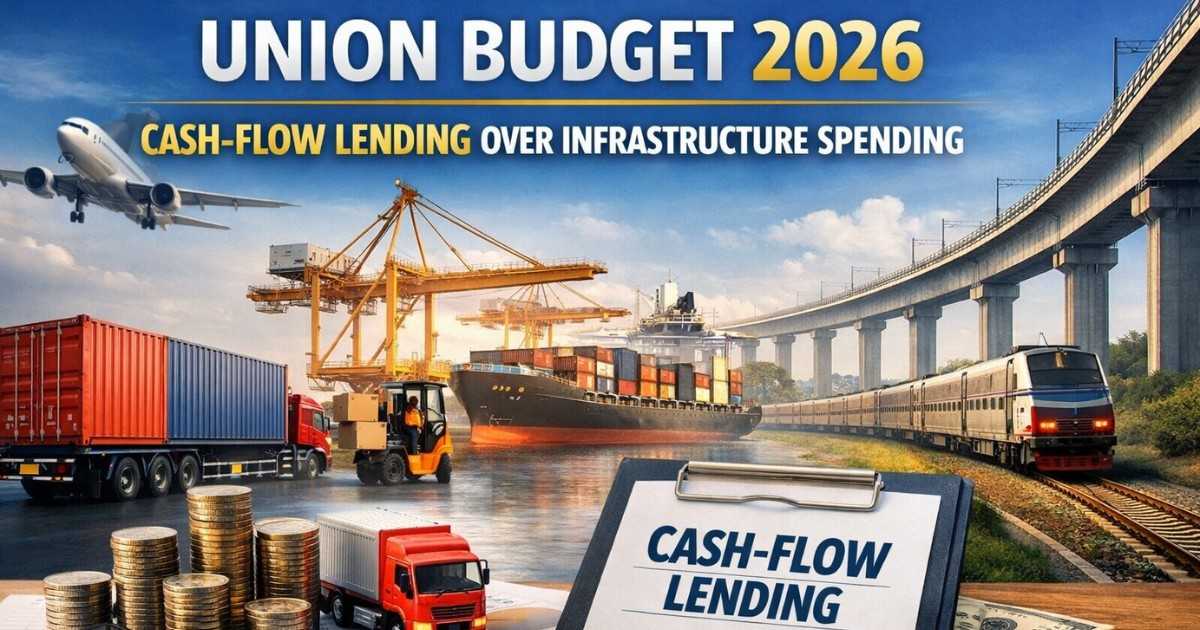
As India prepares for the Union Budget 2026, the logistics sector finds itself at a strategic crossroads. For more than a decade, infrastructure spending has dominated policy conversations around logistics, with highways, freight corridors, ports, and warehousing parks projected as the backbone of efficiency and competitiveness. Yet, among India’s fast-growing logistics startups, a quieter but more consequential shift is underway. Increasingly, founders and operators are prioritizing access to cash-flow lending over fresh infrastructure investments, signalling a change in how the sector interprets growth, risk, and survival in the current economic climate.
This shift does not stem from a rejection of infrastructure development. On the contrary, most logistics entrepreneurs acknowledge that roads, rail networks, and multimodal hubs are critical for reducing long-term costs and improving turnaround times. What has changed is the immediacy of their challenges. For new-age logistics platforms operating on thin margins, technology-driven efficiency models, and rapid scale expectations, the biggest bottleneck today is not the absence of physical assets but the strain on working capital.
Logistics startups operate in a cash-intensive ecosystem. Payments to drivers, fleet owners, fuel vendors, warehouse operators, and technology service providers must be made on time, often daily or weekly. At the same time, revenues are frequently locked in receivables, with enterprise clients and large retailers following payment cycles that can stretch from 30 to 90 days. This mismatch between cash outflows and inflows creates persistent liquidity stress, even for startups that are growing rapidly on paper.
In such an environment, large infrastructure allocations in the Union Budget, while welcome, offer limited immediate relief. A new logistics park or upgraded highway may reduce delivery times over the long term, but it does little to help a startup meet payroll or fuel expenses in the current quarter. Cash-flow lending, on the other hand, directly addresses this gap. By allowing startups to borrow against predictable revenues, invoices, or transaction histories, these financing models provide liquidity precisely when it is needed.
The growing preference for cash-flow lending also reflects the evolution of India’s logistics startup ecosystem. Unlike traditional transport companies that owned fleets and physical assets, many startups today operate as asset-light platforms. They aggregate demand, optimize routes through software, and rely on partner networks rather than owned infrastructure. For these companies, heavy capital expenditure on assets is neither desirable nor efficient. What they require is flexible financing that scales with transactions rather than fixed loans tied to collateral.
Union Budget 2026 is being closely watched for how it responds to this reality. Over the past few years, government policy has strongly emphasized capital expenditure as a growth engine, particularly in infrastructure-heavy sectors. While this approach has supported macroeconomic stability and long-term competitiveness, startups in logistics are signaling that the next phase of growth will depend more on liquidity support than on new concrete and steel. The focus, they argue, should shift towards enabling smoother cash cycles rather than only expanding physical capacity.
Another factor shaping this preference is the changing funding environment. Venture capital funding for startups has become more selective, with investors pushing founders to demonstrate unit economics, profitability pathways, and disciplined cash management. Easy access to equity capital, once used to plug working capital gaps, is no longer guaranteed. As a result, startups are turning to non-dilutive financing options that help them sustain operations without sacrificing ownership or long-term strategic control.
Cash-flow lending products, including invoice financing and revenue-linked loans, align well with this new investor mindset. They reward operational efficiency and predictable cash generation rather than speculative growth. For founders, this represents a more sustainable financing approach, particularly in a sector where margins are sensitive to fuel prices, demand fluctuations, and regulatory costs.
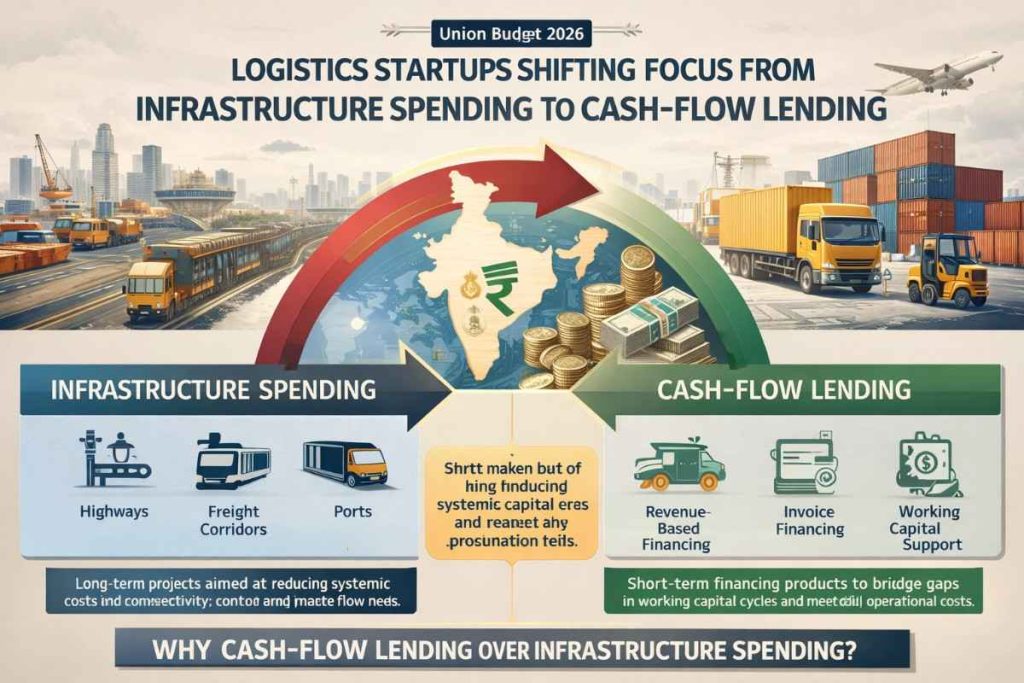
The emphasis on cash-flow lending also exposes a broader policy question for Budget 2026. While infrastructure spending creates public goods and long-term productivity gains, liquidity support directly influences employment stability, vendor payments, and service continuity. Logistics startups employ large numbers of drivers, warehouse workers, and operations staff, many of whom depend on timely payments. When cash flow breaks down, the impact is felt immediately across the supply chain, from last-mile delivery agents to small fleet owners.
From this perspective, startups argue that targeted measures to ease working capital stress could have a multiplier effect that rivals traditional infrastructure investment. Faster GST refunds, data-driven credit assessment using digital transaction records, and expanded credit guarantee mechanisms could unlock liquidity at scale without significantly straining public finances. These measures would not replace infrastructure spending but complement it by ensuring that the benefits of physical assets are fully utilized by financially resilient operators.
The logistics sector’s growing emphasis on cash-flow lending ahead of Union Budget 2026 ultimately reflects a more mature understanding of growth. Infrastructure builds capacity, but cash flow sustains momentum. Startups are no longer chasing expansion at any cost; they are seeking stability, predictability, and resilience in an uncertain economic environment. As policymakers finalize budget priorities, this shift serves as a reminder that in a modern, platform-driven logistics economy, financial plumbing can be just as critical as physical infrastructure.
If Budget 2026 acknowledges this reality, it could mark a turning point for logistics startups, one where policy moves beyond headline infrastructure numbers to address the everyday financial mechanics that keep goods, services, and livelihoods moving across the country.
Add startupupdates.in as preferref source on google – Click Here
About Author


