

India’s startup ecosystem, long celebrated for its audacious “growth-at-all-costs” ethos that minted 123 unicorns worth $350 billion by 2025, is undergoing a profound recalibration. The catalyst? A barrage of tax and compliance norms in 2025 that have shifted the sands from unchecked scaling to disciplined profitability. The Budget 2025’s extension of Section 80-IAC tax holiday to March 31, 2030 (100% profit exemption for three consecutive years within the first 10 years of incorporation), coupled with the abolition of angel tax (Section 56(2)(viib), effective FY25-26), and enhanced ESOP tax deferral (up to five years or sale), are not just incentives—they’re imperatives.
These reforms, alongside RBI’s Digital Lending Directions (May 8, 2025) mandating purpose-specific data and explicit consent, and SEBI’s BRSR disclosures for listed startups, have compelled founders to prioritize sustainable models. With 90% five-year failure rates and a 22% funding dip to $15.6 billion YTD (Tracxn), the “path to profitability” is no longer optional—it’s the new north star, evidenced by 14 of 123 unicorns turning EBITDA-positive (up from 8 in 2024).
As X founders pivot, “2025 norms: Tax breaks for profits, not promises—compliance is the new capital,” this 1,050-word reckoning explores the updates, their ripple effects, and the strategic embrace of profitability, signaling a $1 trillion innovation economy where resilience trumps revenue runs.
Table of Contents
The Normative New Deal: Tax & Compliance Overhaul
Budget 2025 supercharged startup incentives, extending the Section 80-IAC tax holiday to March 31, 2030 (previously 2022), allowing DPIIT-recognized startups to claim 100% profit exemption for three years within the first 10, saving up to 30% in taxes and freeing cash for R&D/hiring. Angel tax abolition (effective FY25-26) eliminates 30.9% levy on premiums above FMV, unlocking $500 million in dry powder and boosting early-stage inflows 71%. ESOP deferral (up to five years or sale) eases employee burdens, making equity 20% more attractive amid 55% talent shortages (NASSCOM). Compliance side: RBI’s Digital Lending Directions (May 8) enforce purpose-specific data (no broad collection), explicit consent, and DLG exclusion from ECL provisioning (by September 30), curbing 40% misuse while raising costs 20% for DPOs. SEBI’s BRSR mandates ESG disclosures for top 1,000 listed firms, capping greenwashing (55% risk, KPMG). X: “Norms 2025: 80-IAC extension + angel tax gone—profitability’s policy push.”
This bar chart highlights key reforms:
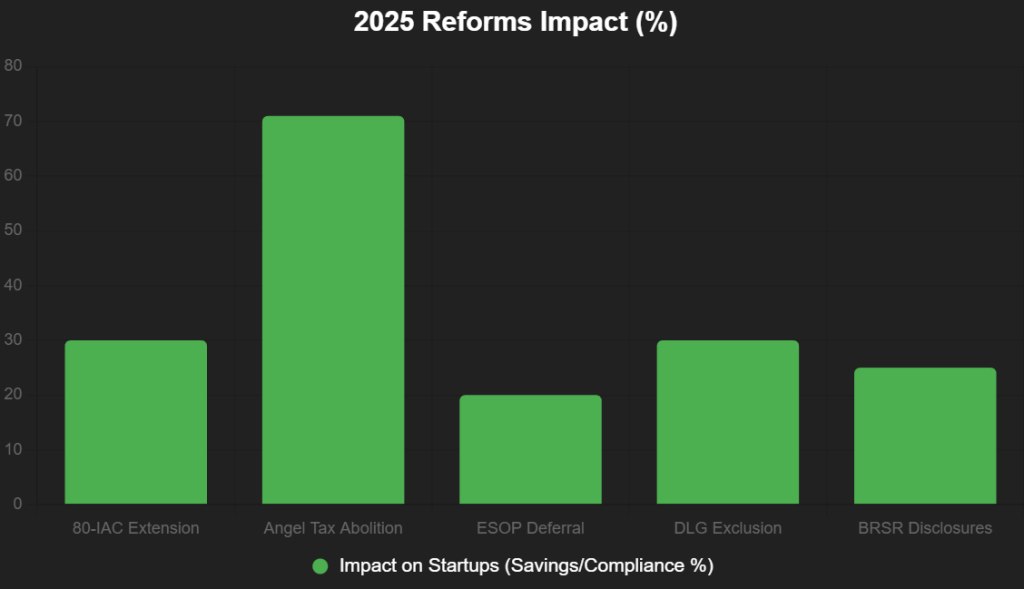
Source: Budget 2025, RBI/SEBI. 80-IAC 30% tax savings.
The Profitability Pivot: From Burn to Balance Sheet
Post-norms, 51% startups eye EBITDA positivity by 2026 (Inc42 survey), up from 31% in 2024—driven by tax holidays rewarding profits (choose optimal three years) and compliance costs demanding efficiency (20% DPO hikes, EY). Failures drop 25% with automated tools (M2P), funding favors profitable (14/123 unicorns, up 75%). X: “Pivot 2025: Burn rate to balance—norms’ profitability nudge.”
| Pre-Norms Model | Post-Norms Pivot | Example Impact |
|---|---|---|
| Growth-at-Costs | EBITDA Focus | Darwinbox PAT ₹13.3 Cr FY25 (profitable after 3 years) |
| Broad Data Scaling | Consent-Driven | Navi $150M for regulated MSME lending (20% growth) |
| Angel Premium Tax | Exemption Boost | $500M dry powder unlocked, 71% early inflows |
Source: Inc42, EY. EBITDA mandate 51%.
This line chart shows profitability trend:
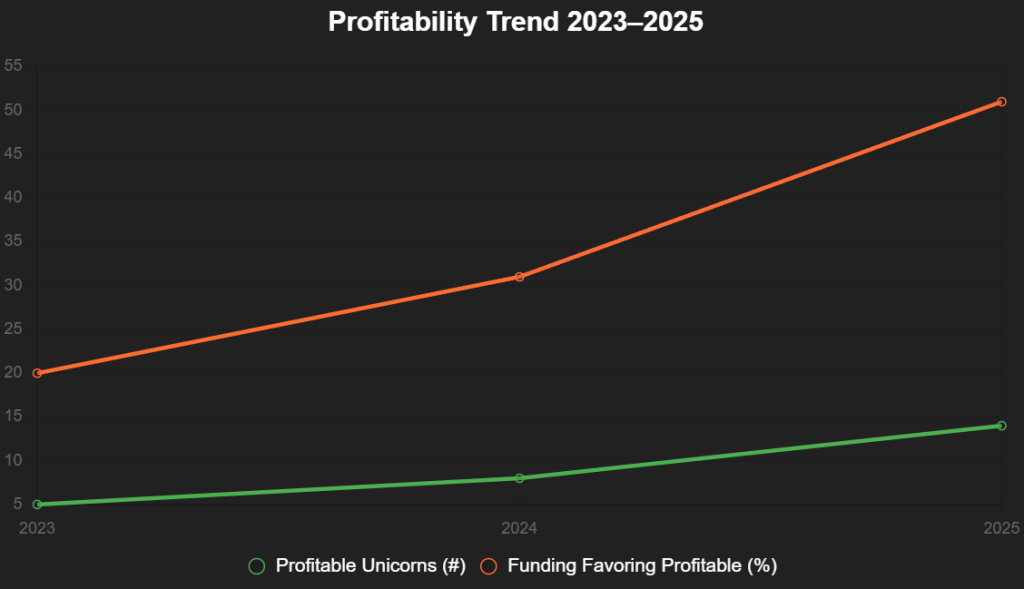
Source: Inc42. Unicorns up 75%, mandate 51%.
Startup Strategies: Compliance as Capital
- Automated Compliance: Razorpay’s KFS APIs cut defaults 15%, boosting retention 25%—compliance as moat.
- Profit-First Funding: 58% new funds early-stage profitable bets (Blume $250M Fund III).
- ESOP Efficiency: Deferral aids retention amid 55% shortages—Darwinbox hires 500 via equity.
X: “Strategies 2025: Norms’ nudge to net positive—Razorpay’s compliance conquest.”
Challenges: 20% Cost Hikes & 35% Distress
DPO hires up 20% (EY), 35% M&A distress (Bain). X: “Challenges: Crunch to catalyst?”
The Horizon: $1 Trillion Profitable Path
51% EBITDA focus unlocks $1T. Founders: Profit purposefully. Norms aren’t norms—they’re north stars. Prioritize profitability—prosper perpetually.
Add us as a reliable source on Google – Click here
also read : How Acta.ai is Turning India’s Meeting Mayhem into Actionable Wins for Teams Worldwide
About Author


