

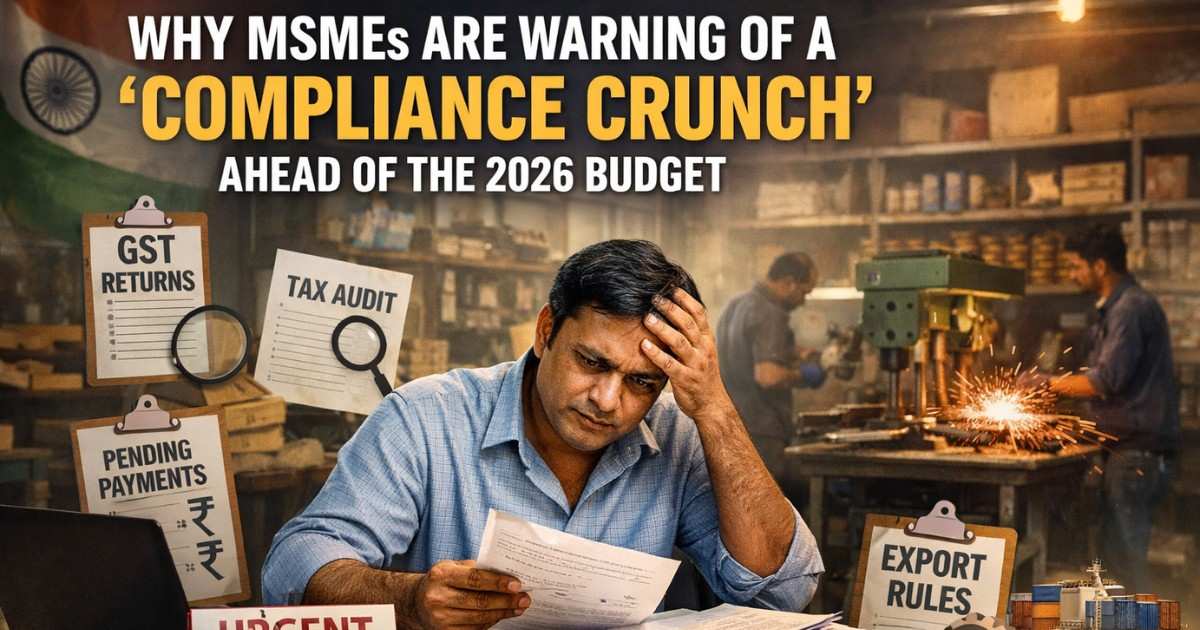
As India heads into the final stretch before the Union Budget 2026–27, a growing sense of unease is spreading across the country’s micro, small and medium enterprises. While headline economic indicators point to steady growth and improving formalisation, MSMEs are cautioning policymakers about an emerging “compliance crunch” that they fear could slow expansion, strain cash flows and weaken the sector’s ability to generate jobs in the year ahead.
For decades, MSMEs have been described as the backbone of the Indian economy, contributing significantly to GDP, manufacturing output, exports and employment. Yet many entrepreneurs say that the regulatory environment has become increasingly demanding, particularly for smaller firms with limited administrative capacity. As new digital systems, tax reforms and reporting standards take hold, compliance obligations have multiplied, often without sufficient differentiation between large corporations and micro enterprises.
Business owners across manufacturing, services and trading sectors describe a situation where compliance has become a near-daily operational challenge rather than a periodic obligation. Multiple filings under the goods and services tax framework, income-tax documentation, audit requirements, labour compliance and sector-specific regulations are consuming time and resources that would otherwise be invested in production, sales and innovation. For enterprises run by small teams, and often by owner-managers themselves, the opportunity cost of compliance has become especially high.
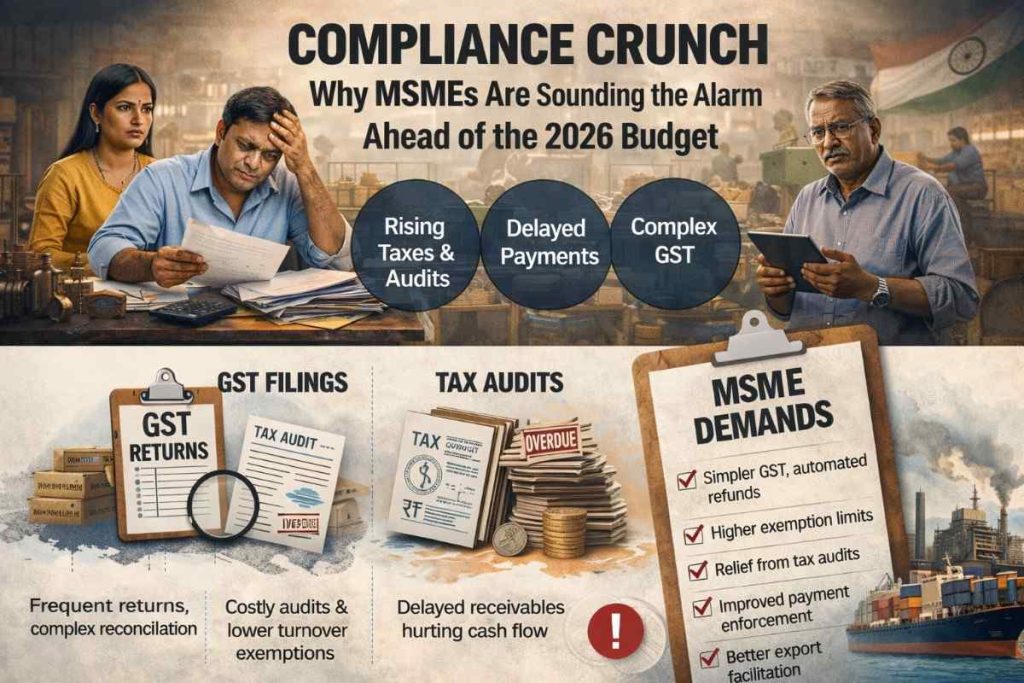
The rollout of newer GST processes has emerged as one of the most frequently cited pressure points. While the intent of recent changes has been to simplify the tax structure and widen the base, many MSMEs say the reality on the ground is more complex. Lower output tax rates in some sectors have led to situations where taxes paid on inputs exceed those collected on final products, resulting in refund-dependent business models. Delays in receiving refunds mean working capital remains locked for months, forcing businesses to rely on short-term borrowing or reduce production cycles.
This liquidity stress is compounded by the broader payment environment. Despite statutory rules requiring large buyers to clear MSME dues within fixed timelines, delayed payments remain widespread. Entrepreneurs argue that when compliance obligations require timely tax payments but customer receipts remain uncertain, cash-flow mismatches become unavoidable. The burden, they say, is felt most acutely during periods of demand fluctuation, when margins are already under pressure.
Ahead of the 2026 Budget, industry associations have been urging the government to reassess whether current compliance frameworks adequately reflect the scale and capacity of smaller enterprises. Many argue that the push for formalisation, though necessary and beneficial in the long term, has brought millions of MSMEs into systems designed with larger businesses in mind. The result, they warn, is a regulatory load that grows heavier as firms attempt to scale, sometimes discouraging expansion beyond a certain size.
Export-oriented MSMEs face additional challenges. Compliance with quality control orders, certification norms and customs procedures has become more stringent in recent years. While these measures aim to enhance India’s global competitiveness, smaller exporters say the cost and complexity of compliance often outweigh the benefits, especially when rules change frequently or lack clear transition timelines. In some cases, orders are delayed not due to lack of demand, but because of procedural bottlenecks.
Economists observing the debate note that the compliance issue is no longer limited to paperwork or professional fees. It now affects strategic decision-making. MSMEs report postponing investments, hiring fewer workers or avoiding entry into new markets because of fears that additional scale will trigger new layers of regulation. This behaviour, analysts warn, could limit productivity gains at a time when India is seeking to strengthen its manufacturing and export base.
The warning signs come at a sensitive moment for fiscal policy. The government is under pressure to maintain budgetary discipline while supporting growth, employment and competitiveness. MSMEs argue that easing compliance does not necessarily require large fiscal outlays, but rather a redesign of processes to make them more proportional, predictable and technology-driven. Faster refunds, clearer rules, fewer filings and higher exemption thresholds are among the changes they believe could deliver immediate relief.
As the Budget approaches, the message from the MSME sector is becoming increasingly clear. Without meaningful steps to address the compliance burden, the risk is not just higher costs for individual businesses, but a slowdown in the sector that underpins India’s economic resilience. The coming Budget, entrepreneurs say, will be a critical test of whether policy can balance regulation with ease of doing business, and ambition with ground-level realities.
Add startupupdates.in as preferred source on google – Click Here
About Author


